
The subsidy is the reason PM-KUSUM is so popular. This guide explains the Kusum solar pump subsidy and the farmer’s beneficiary contribution in Maharashtra so you know roughly what you will pay.
How the cost is shared
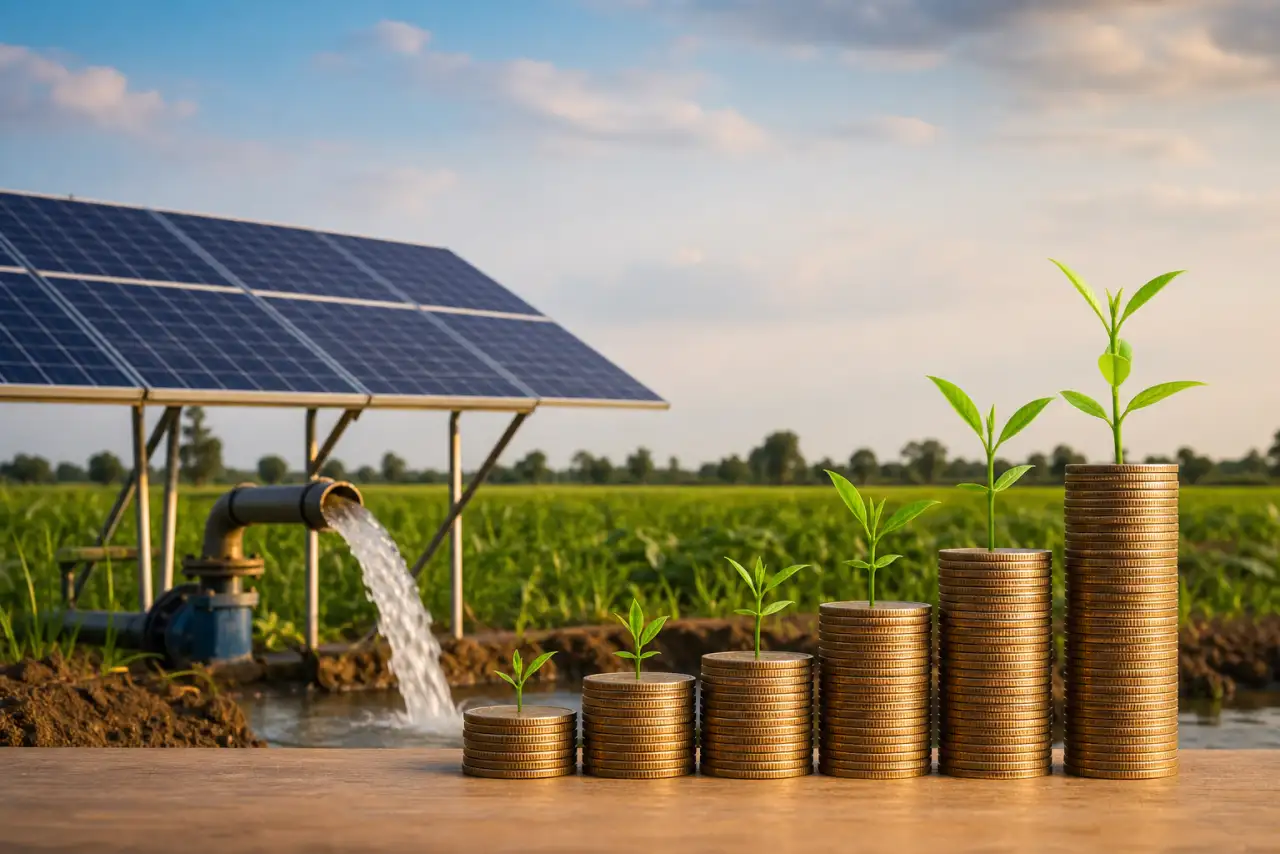
Under PM-KUSUM Component B, the cost of the solar pump is shared between the central government (MNRE), the state government and the farmer. In Maharashtra’s official Component B terms, the farmer’s share is:
| Category | Farmer contribution | Covered by subsidy |
|---|---|---|
| General | ~10% | ~90% (central + state) |
| SC / ST | ~5% | ~95% (central + state) |
What affects the final amount?
- Pump capacity (HP): 3 HP, 5 HP and 7.5 HP have different benchmark costs.
- Benchmark / tender cost: revised periodically by the authorities.
- Category: SC/ST pay a lower share.
Because benchmark costs change, treat any figure as indicative and confirm the exact contribution on the official portal at the time of applying.
हिंदी में सारांश
पीएम-कुसुम में सोलर पंप की लागत केंद्र सरकार, राज्य सरकार और किसान मिलकर वहन करते हैं। सामान्य वर्ग का किसान लगभग 10% और SC/ST किसान लगभग 5% भुगतान करता है। शेष राशि सब्सिडी के रूप में मिलती है। अंतिम राशि पंप क्षमता (HP) और बेंचमार्क लागत पर निर्भर करती है।
Worked example: indicative farmer contribution
Suppose the central basic cost for a 5 HP Component B pump is published at ₹3,00,000 on the MNRE/MEDA benchmark table. A general-category farmer might pay roughly 10% (₹30,000) as beneficiary share while SC/ST farmers pay about 5% (₹15,000). The remaining amount is met through central and state subsidy. Your actual rupee figure depends on pump HP, vendor benchmark rates and any state top-up — not informal market quotes.
Diesel pumps often cost ₹40,000–₹80,000 per year in fuel and maintenance in many Maharashtra districts. A subsidised solar pump converts much of that recurring cost into a one-time contribution, with daytime pumping suited to several crop schedules.
Subsidy changes and how to verify amounts
Kusum solar pump subsidy in Maharashtra follows government benchmark costs that can be revised each financial year. Before paying, open the official Mahaurja portal and read the SMS/payment screen carefully. Never pay third-party agents who promise lower shares. Compare Component B with state programmes such as MSKPY on the components guide.
Next steps: confirm eligibility, gather documents and complete online registration.
Official portals & links
Repair guarantee and long-term savings
Installed pumps usually include a multi-year repair guarantee handled through the empanelled vendor network. Keep handover papers and warranty cards safe. Compared with annual diesel spend, many farmers recover beneficiary contribution within a few seasons where irrigation hours are high.
Comparing diesel, grid and solar operating cost
Grid tariffs and diesel prices vary by district and season. Solar pumping eliminates fuel trips but runs mainly in daylight hours. Farmers with existing three-phase connections may also evaluate Component C solarisation through discom channels before choosing Component B.
Payment safety reminder
Pay beneficiary share only through the official Mahaurja payment screen after SMS shortlisting. MEDA has warned against third-party collection agents and copycat domains that mimic the Kusum portal.
Keep a simple notebook of diesel expenses for one season to compare against the indicative beneficiary share shown on the official portal.
FAQ
Related: eligibility, documents, and the full PM-KUSUM Maharashtra guide.