
PM-KUSUM is made up of three parts, called Components A, B and C. Understanding them helps you choose the right path. This guide explains PM-KUSUM Components A, B and C with simple examples.
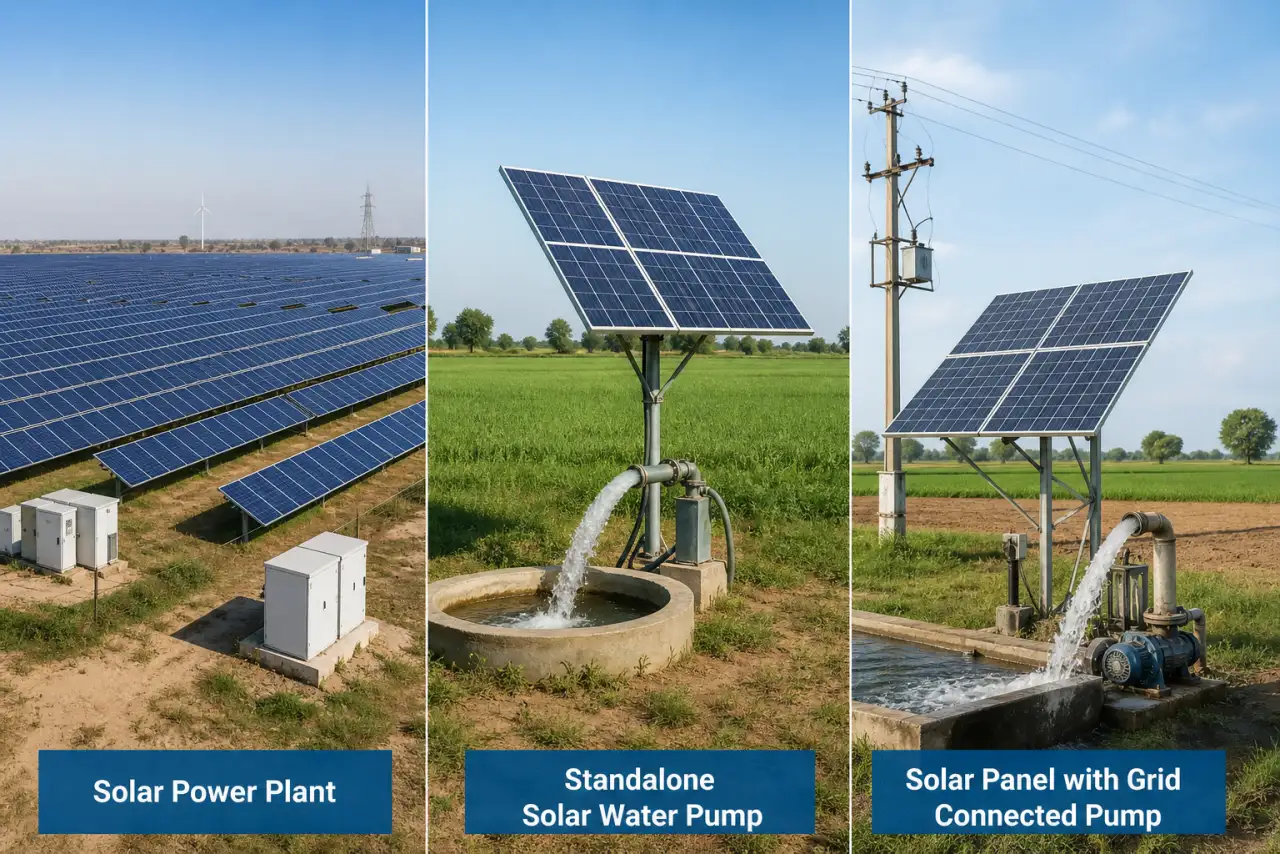
Component A – Solar power plants
Farmers, cooperatives or developers set up small solar power plants (individual capacity up to 2 MW) on barren, fallow or cultivable land. The electricity is sold to the local distribution company, creating an income stream from otherwise idle land.
Component B – Standalone solar pumps
This is the part most individual farmers want. It covers the installation of standalone solar agriculture pumps (commonly 3 HP to 7.5 HP) for off-grid areas where grid power is not available. The solar panels directly power the pump for daytime irrigation.
Component C – Solarisation of grid-connected pumps
Existing grid-connected agriculture pumps are solarised, so farmers can use solar power for irrigation and feed surplus electricity back to the grid.
Which component is for me?
| Your situation | Likely component |
|---|---|
| No grid power, need a new pump | Component B |
| Have a grid-connected pump already | Component C |
| Have spare land to generate income | Component A |
हिंदी में सारांश
पीएम-कुसुम के तीन भाग हैं: Component A – सौर ऊर्जा प्लांट, Component B – स्वतंत्र सौर कृषि पंप (अधिकांश किसानों के लिए), और Component C – ग्रिड से जुड़े पंपों का सौरीकरण।
Component A in Maharashtra context
PM-KUSUM Component A supports solar power plants on feeder lines so farmers on a distribution feeder can access daytime solar power. It is typically implemented at scale by utilities and farmer groups rather than individual smallholders. Most family farms researching Kusum Mahaurja focus on Components B or C instead.
Choosing between Component B and Component C
Component B suits farmers without reliable grid supply who need a standalone solar agriculture pump near a borewell or open well. Component C solarises an existing grid-connected electric pump, reducing discom energy draw. Maharashtra implements Component B through MEDA/Mahaurja and many state solar-pump programmes through MSEDCL portals. Compare subsidy mechanics in our subsidy guide.
Check eligibility, prepare documents and start registration once you know which component fits your farm.
Official portals & links
State programmes alongside PM-KUSUM
Maharashtra also runs solar-pump initiatives through MSEDCL such as Mukhyamantri Saur Krushi Pump Yojana and Magel Tyala Saur Krushi Pump. Portal, subsidy mechanics and vendor networks differ from Component B. Compare options before committing to one scheme on a single land parcel.
Feeder-level Component A for farmer groups
Component A is relevant where a group of farmers on one rural feeder wants daytime solar power. Implementation is utility-led and unlike individual Component B registration. Most readers of this guide will still choose B or a state MSEDCL scheme.
Where to read official component notifications
MNRE publishes component-wise guidelines on the PM-KUSUM page; Maharashtra adds state implementation notes via MEDA. Read both before deciding which component and portal apply to your farm.
Ask your local agriculture officer which component is actively accepting applications in your district before you prepare documents.
Component rules can change between financial years, so read the latest MNRE and MEDA circular before choosing a registration portal.
Verify component eligibility on the official portal each season.
FAQ
Ready to act on Component B? Check eligibility and how to apply, or read the complete PM-KUSUM Maharashtra guide.