
If you are researching kusum component b registration mahaurja portal, this comprehensive guide from Kusum Mahaurja explains how PM-KUSUM and Maharashtra solar pump schemes work, who qualifies, what documents you need, subsidy mechanics, and how to apply safely through official portals only.
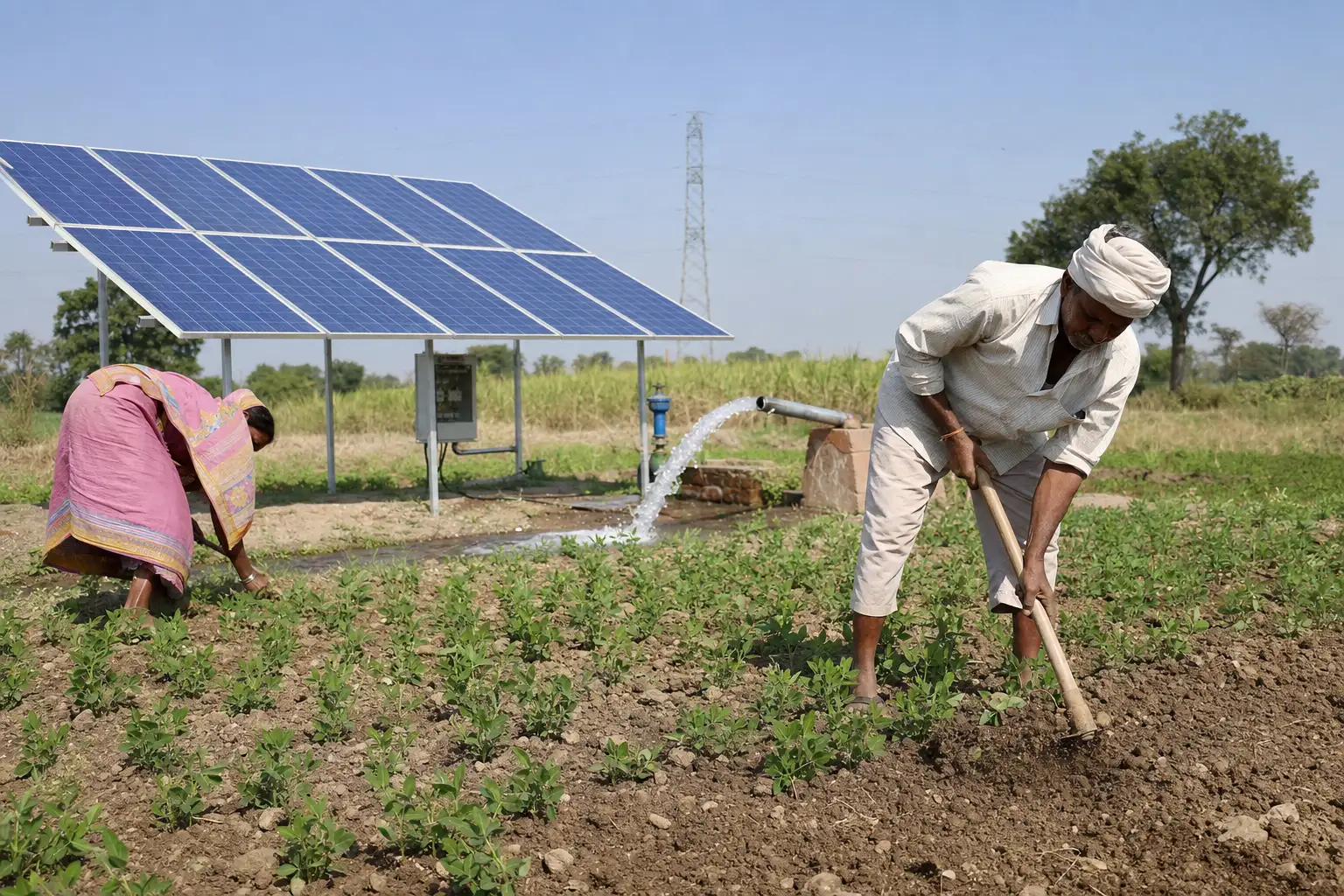
Solar irrigation
Run your pump during daylight without diesel or waiting for night grid supply.
Heavy subsidy
Most benchmark cost is covered by central + state support; farmer share is typically 10% or 5% (SC/ST).
Online process
Apply and track through official portals — related to: kusum component b registration mahaurja portal.
Kusum Component B Registration Mahaurja Portal — complete guide
If you searched for kusum component b registration mahaurja portal, you are likely a farmer or rural landholder trying to understand how PM-KUSUM and Maharashtra’s solar pump programmes can reduce irrigation costs. This guide covers everything you need to know about kusum component b registration mahaurja portal. The scheme replaces expensive diesel use and unreliable grid supply with daytime solar pumping, which can improve water access while lowering long-term operating costs.
PM-KUSUM (Pradhan Mantri Kisan Urja Suraksha evam Utthaan Mahabhiyaan) is implemented in Maharashtra through MEDA / Mahaurja for Component B standalone pumps, and through MSEDCL for related state schemes such as Mukhyamantri Saur Krushi Pump Yojana and Magel Tyala Saur Krushi Pump Yojana. Rules, benchmark costs and quotas can change, so treat this guide as an explainer and always confirm details on official websites before applying.
Most individual farmers focus on Component B: an off-grid solar agriculture pump (commonly 3 HP, 5 HP or 7.5 HP) installed near a borewell, open well or farm pond. The system runs during sunlight hours, which suits many irrigation schedules in Maharashtra. Component C solarises existing grid-connected pumps, while Component A supports feeder-level solar plants — usually relevant to groups or discoms rather than a single smallholder.
Subsidy is shared between the central government, Maharashtra state government and the farmer. Official application terms typically require general category beneficiaries to pay 10% of the central basic cost and SC/ST beneficiaries about 5%. The balance is subsidised. Your actual rupee amount depends on pump capacity and the current MNRE/MEDA benchmark cost table, not on informal quotes from agents.
Before you start an online application, prepare scanned copies of key documents: Aadhaar, 7/12 extract showing agricultural land, bank account proof, passport photo and caste certificate if applicable. Enter names and survey numbers exactly as printed on revenue records. Mismatches are a common reason for delays or rejection during verification.
After registration, your application may go through scrutiny, field verification and vendor allocation. Installation should be done only by an empanelled vendor for your scheme and district. The system usually includes a multi-year repair guarantee period; keep handover papers, warranty cards and the official payment receipt safe for future service requests.
Diesel pumps can cost tens of thousands of rupees per year in fuel and maintenance. A subsidised solar pump converts a large part of that recurring expense into a one-time beneficiary contribution. Payback depends on HP, hours of use and diesel prices, but many farmers report substantial savings within a few seasons, especially where grid power is unavailable or load shedding is frequent.
Application process
Check eligibility
Confirm land ownership, water source depth and whether Component B or a state scheme (MSKPY / Magel Tyala) fits your situation.
Prepare documents
Scan Aadhaar, 7/12 extract, bank proof and caste certificate (if SC/ST). Keep file sizes within portal limits.
Register online
Open the official Mahaurja or MSEDCL portal, complete the beneficiary form and upload documents.
Track & pay
Monitor status in the beneficiary login. Pay the beneficiary share only on the official portal if approved.
Installation
An empanelled vendor installs and commissions the pump. Test flow rate and store warranty documents.
Detailed walkthrough: apply online guide · documents checklist · eligibility
If you searched for kusum component b registration mahaurja portal, you are likely a farmer or rural landholder trying to understand how PM-KUSUM and Maharashtra’s solar pump programmes can reduce irrigation costs. This guide covers everything you need to know about kusum component b registration mahaurja portal. The scheme replaces expensive diesel use and unreliable grid supply with daytime solar pumping, which can improve water access while lowering long-term operating costs.
PM-KUSUM (Pradhan Mantri Kisan Urja Suraksha evam Utthaan Mahabhiyaan) is implemented in Maharashtra through MEDA / Mahaurja for Component B standalone pumps, and through MSEDCL for related state schemes such as Mukhyamantri Saur Krushi Pump Yojana and Magel Tyala Saur Krushi Pump Yojana. Rules, benchmark costs and quotas can change, so treat this guide as an explainer and always confirm details on official websites before applying.
Most individual farmers focus on Component B: an off-grid solar agriculture pump (commonly 3 HP, 5 HP or 7.5 HP) installed near a borewell, open well or farm pond. The system runs during sunlight hours, which suits many irrigation schedules in Maharashtra. Component C solarises existing grid-connected pumps, while Component A supports feeder-level solar plants — usually relevant to groups or discoms rather than a single smallholder.
Official links
For background, also read:
- documents required for Kusum Yojana
- Kusum solar pump subsidy and farmer share
- Kusum beneficiary login and application status
Before you pay any beneficiary share or sign vendor papers, cross-check every detail on the official MEDA/Mahaurja or MSEDCL portal. Keep screenshots of your submitted application, quota allotment message and payment receipt. If a field executive asks for cash outside the official website, report it through the portal grievance channel and do not pay.
Frequently asked questions
Who can apply for kusum component b registration mahaurja portal?
Generally, farmers with agricultural land and a usable water source in Maharashtra can apply under PM-KUSUM Component B or related state schemes, subject to official eligibility rules. Confirm the latest criteria on the Mahaurja or MSEDCL portal.
What documents are needed?
You typically need Aadhaar, 7/12 land extract, bank passbook, photograph and caste certificate if claiming SC/ST beneficiary share. See our documents checklist for the full list.
How much subsidy can a farmer get?
Under PM-KUSUM Component B in Maharashtra, the central and state governments together cover most of the benchmark cost. General category farmers usually pay about 10% as beneficiary share; SC/ST farmers about 5%. Exact amounts depend on pump HP and current benchmark rates.
How do I apply online?
Register on the official Mahaurja Kusum portal for Component B, or use the MSEDCL off-grid portal for schemes such as Magel Tyala Saur Krushi Pump. Fill land and water-source details, upload documents, and pay the beneficiary share only through the official website if shortlisted.
How can I check application status?
Log in to the beneficiary portal with your registered mobile/Aadhaar and application number. You can track approval, payment and installation stages. See our login and status guide for step-by-step help.
Is this website official?
No. Kusum Mahaurja (kusummahaurja.in) is an independent guide edited by Nepal Bera to help farmers understand PM-KUSUM. For applications and payments, use only official government portals.